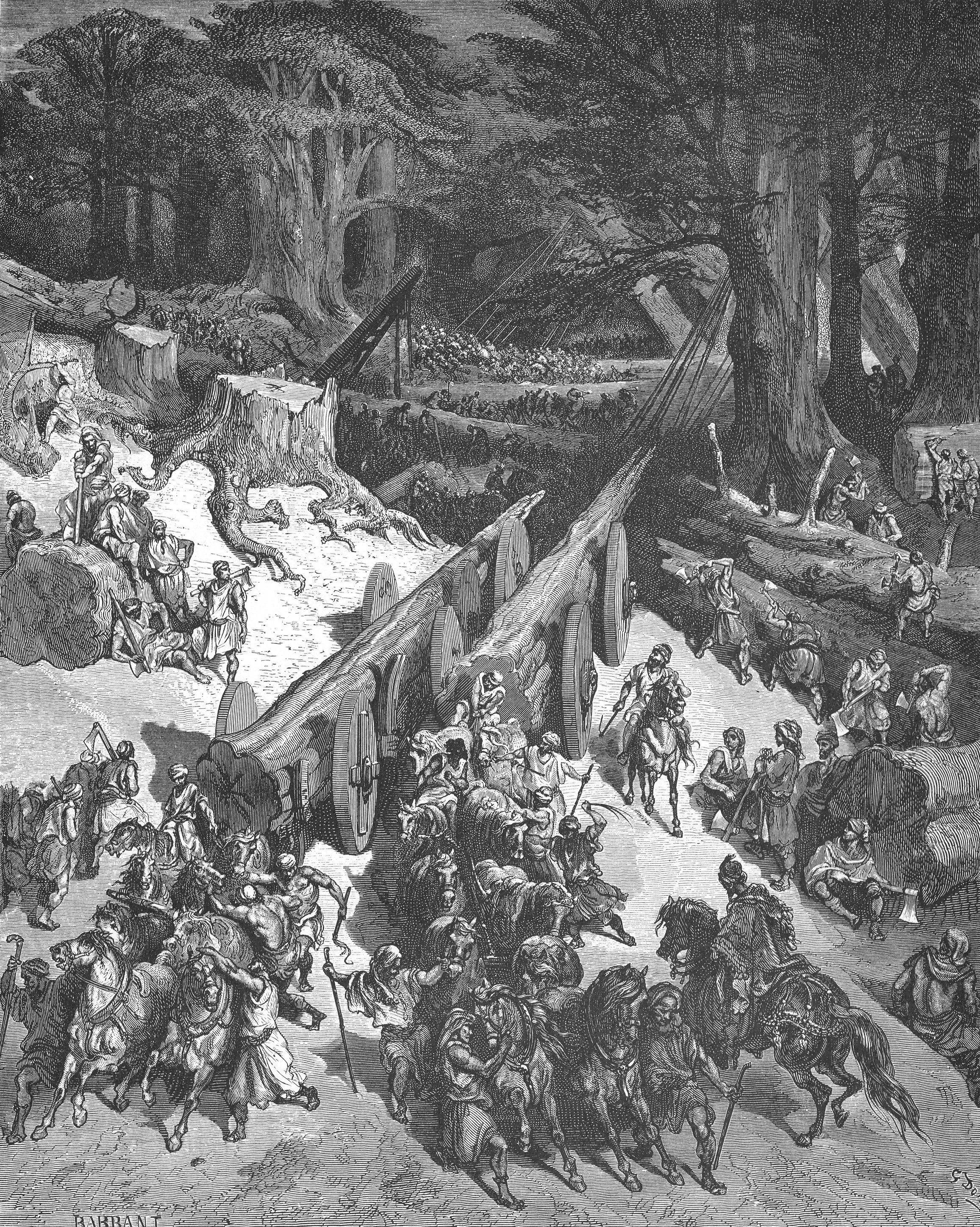
Cedars Are Cut Down for the Jerusalem Temple. Engraving by Gustave Doré from Doré's English Bible (1866). Public domain. Source: Wikimedia Commons.
As with all jobs, some days hold more interesting projects than others. Most of my days are spent breaking down sentence structure, revising US spelling to Canadian and punching holes in stories. I enjoy it immensely and have found I’m good at it, but it can be a grind.
I’ve had a few exceptional days over the last few months when working on Mysteries of the Carpenter (MotC), a social history of carpentry from Gilgamesh to the Industrial Revolution by Bruce MacDonald Murray. Part of the pleasure comes with the fact that David Eso of Fine Line Edits has already edited the manuscript, so I don’t have to worry about the words at all!
Bruce has maintained an amateur work-in-progress blog at mysteriesofthecarpenter.ca for many years and has now written the book based on the dozens of posts there. David connected me with Bruce to help the author trace the copyrights of several images on the blog and source new images (he wants fifty to sixty all told, along with nine maps). Early discussions included the possibility of creating nine original maps and maybe a few original images for each chapter, but my artist friend (and brother-in-law) Chris Bateman disabused me of that notion quickly.
“You could employ an artist full time for a year and they wouldn’t finish,” he said plainly.
OK, so we were being ambitious. I love it.
I then reached out to local archivist and author Sonia Nicholson to give me a hand auditing the blog to ID the images we thought could work in print and then source ideas for new ones. It’s been a real hoot to sift through online archives, museums and other dark corners to find imagery that complements the writing.
That produced a long list of around 150 potential images and image ideas. I asked Bruce to give me a shortlist of sixty to seventy, and then we whittled that down to the current fifty-two. The last few days had me in the online trenches emailing copyright specialists (shout-out to Stephanie Savage, the scholarly communications and copyright librarian at the University of British Columbia, for her advice on a postage stamp depicting St. Thomas the Apostle issued by India Post in the mid-sixties), museum curators (thanks to Cécile, head of the Images Department at the Rijksmuseum, Amsterdam, the Netherlands, for her quick confirmation and release of an engraving of Peter the Great learning shipbuilding in Amsterdam in the late seventeenth century), and specialists in Victorian imagery (I’m looking at you, Simon Cooke at Victorian Web).
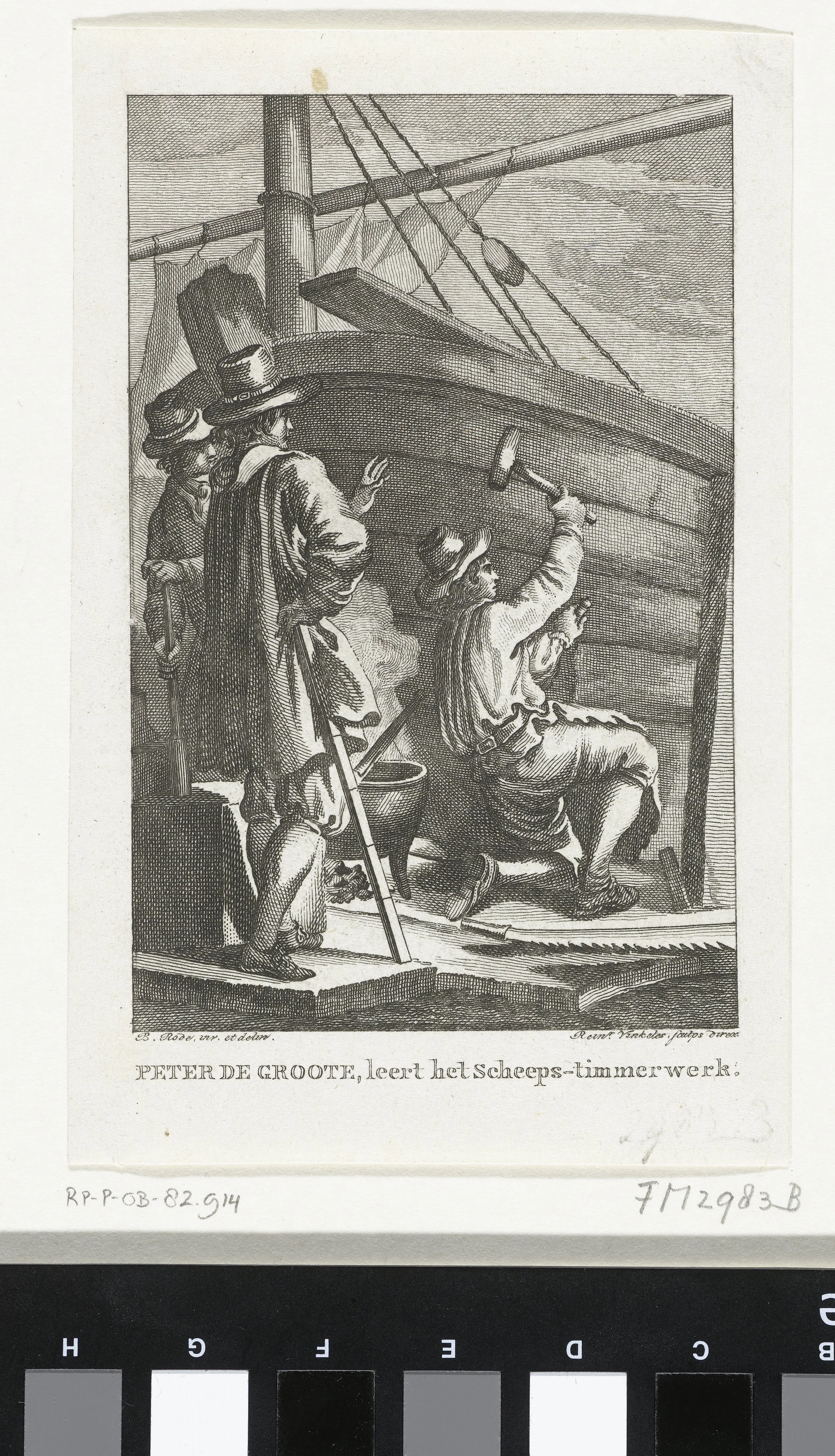
Tsaar Peter de Grote werkend op de werf te Amsterdam, 1697 (Tsar Peter the Great Working at the Amsterdam Shipyard). Etching from the workshop of Reinier Vinkeles after Bernhard Rode (1751–1797). Public domain. Source: Rijksmuseum, Amsterdam.
It’s detailed, grinding, eye-destroying work, but holy cow was it ever satisfying. Early in the process I traced an image from Bruce’s blog of who we thought was Gilgamesh to Wikimedia Commons (which is going to receive a donation from Aldridge Street because of how much I used it on this project; an amazing resource), but it was likely a tick small for decent print production (at 330 x 461 pixels). It had a Creative Commons Attribution–ShareAlike 4.0 (CC BY-SA 4.0) licence that required attribution, a licence reference and disclosure of modifications. My AI assistant examined the JPG’s embedded information and found a source URL pointing to a different Wikimedia Commons page from the Brooklyn Museum that led to a larger version (1,099 x 1,536 pixels) with no known copyright restrictions. It also doesn’t ID the image as Gilgamesh, so we’re in the process of confirming (a good catch). The museum identified the image as having no known copyright restrictions, so I could use that version without negotiating a separate licence.
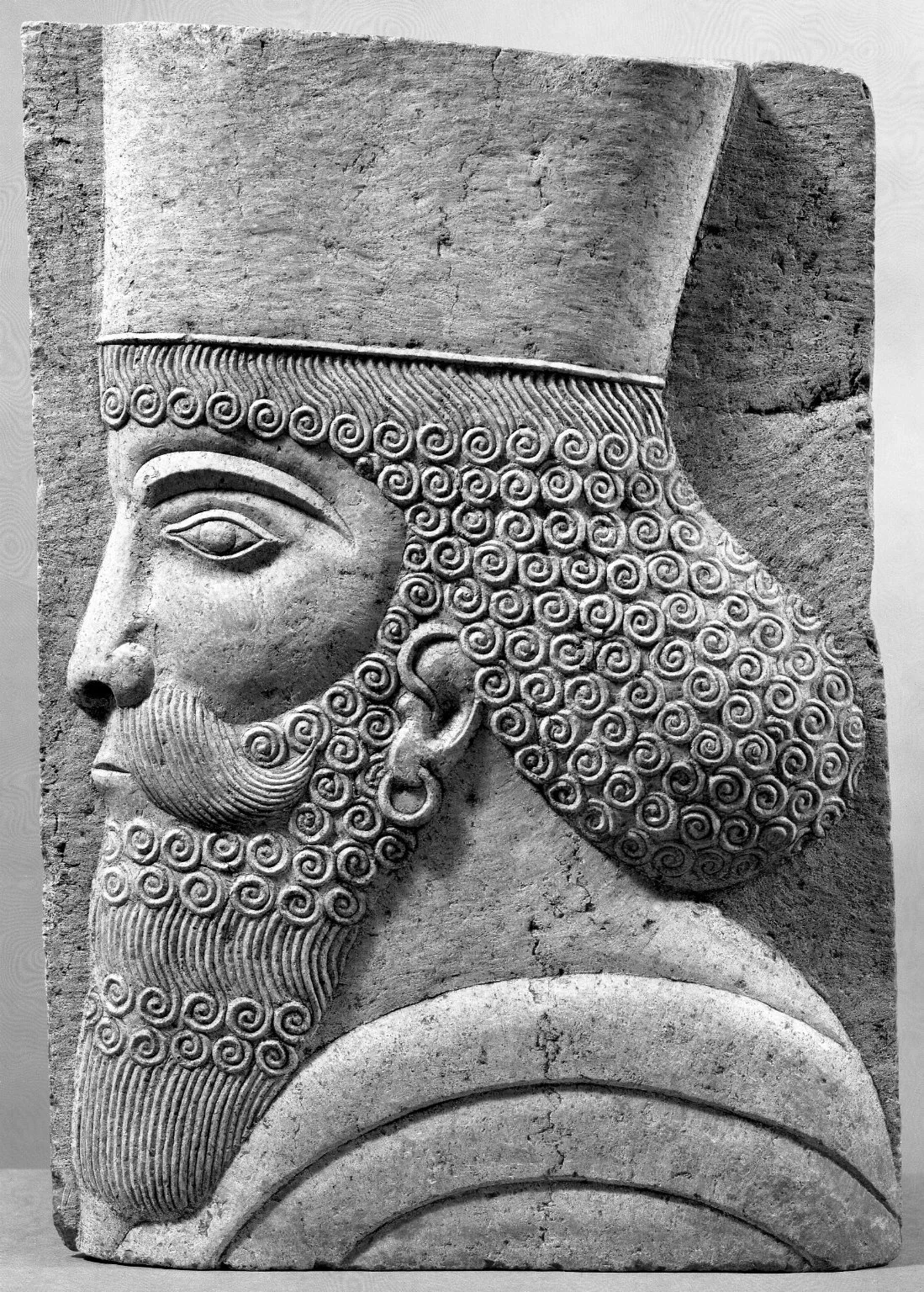
Is this Gilgamesh? We’re trying to figure that out. If you know, please let me know.
Relief, late 19th century. Limestone. Brooklyn Museum, New York. No known copyright restrictions. Source: Wikimedia Commons.
I mentioned the maps as well. Oh, the maps! I spent an enjoyable afternoon pawing through historical atlases, including those by John Dower and Samuel Butler [images], to develop a map for each chapter (based on nine different regions).
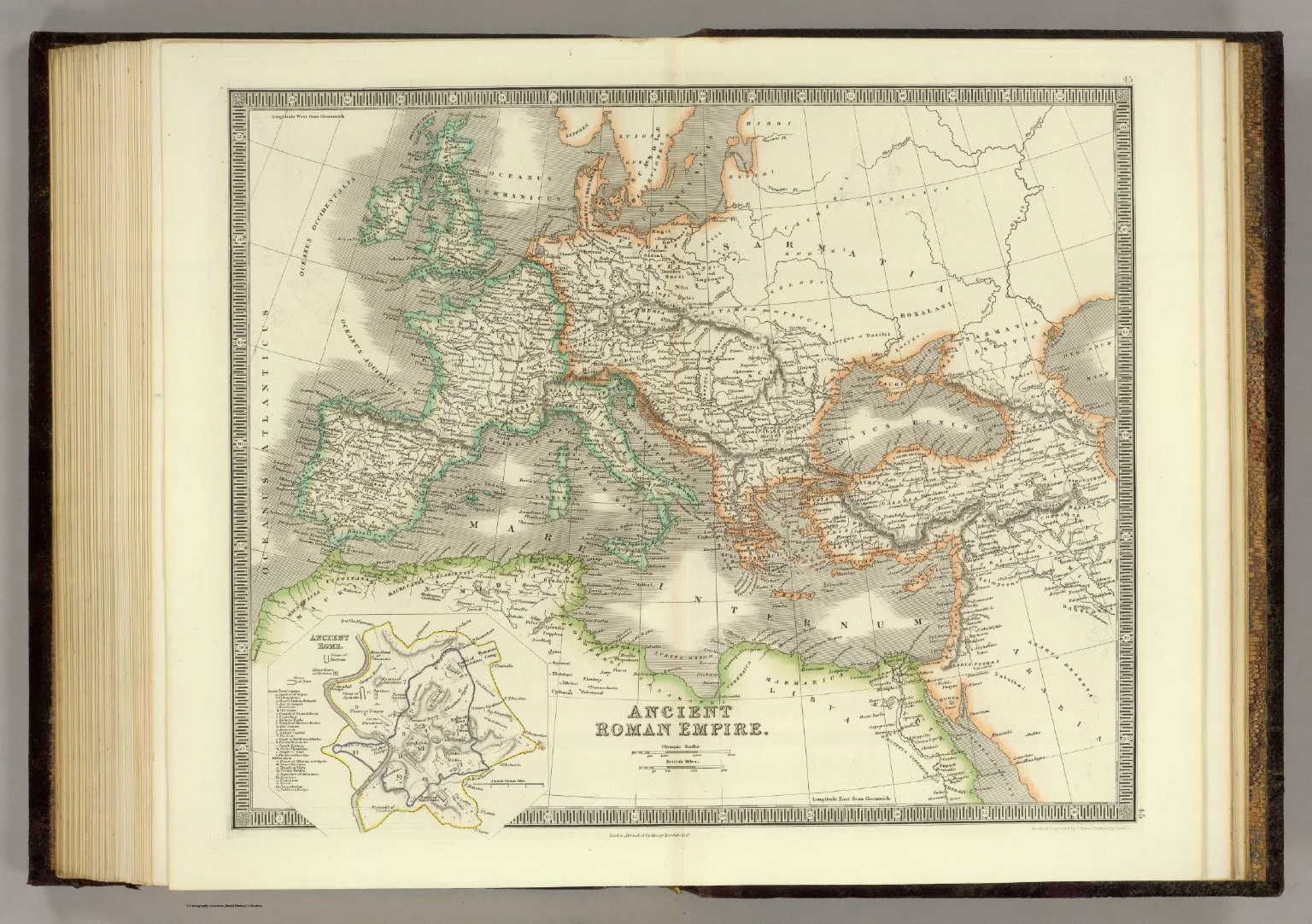
Ancient Roman Empire (1844). Drawn and engraved by John Dower. Published by Henry Teesdale & Co., London. Historical map in the public domain. Source: David Rumsey Historical Map Collection
Because we’re dealing with ancient history, we needed maps of the ancient world. Turns out Mr. Dower’s and Mr. Butler’s were in the public domain, and I decided we could likely match the styles so there was visual continuity throughout.
While Bruce appreciated the maps, he felt the styles were too disparate given that he could create maps using AI with a common style, lettering, etc. I agree with that assessment, but there is something about the look of AI-generated imagery that I’m not convinced is right for the book. And there’s considerable charm in those old atlases. We’re still working through this decision.
Book designer Bonnie Mitchell, who’ll be turning all these bits and bobs into a piece of art worth holding in your hands, has been integral to those discussions. Her input on image resolution, placement of the chapter maps and myriad other issues has been invaluable.
I will say AI has become something of a research and production assistant on this project. I’ve been using it to track down the original sources of images, help decipher the intricacies of copyright and licensing, and compile image credits. It’s also been useful in the less glamorous aspects of book production: preparing for meetings, keeping track of the budget and juggling the various bits and pieces that need to come together before the book goes to print. It doesn’t always get things right, but the more I understand its strengths and limitations, the more useful a tool it becomes.*
I enjoy investigating the tension between working with centuries-old maps and engravings and using AI, digital archives, metadata and contemporary design software to bring that imagery into a modern publication. It’s fun, and some days it beats parsing the difference between “toward” and “towards.”
*Note: My ChatGPT assistant wrote this paragraph when I asked it to assess its role on Bruce’s project.